Absolute Scuba Bali

Absolute Scuba Bali
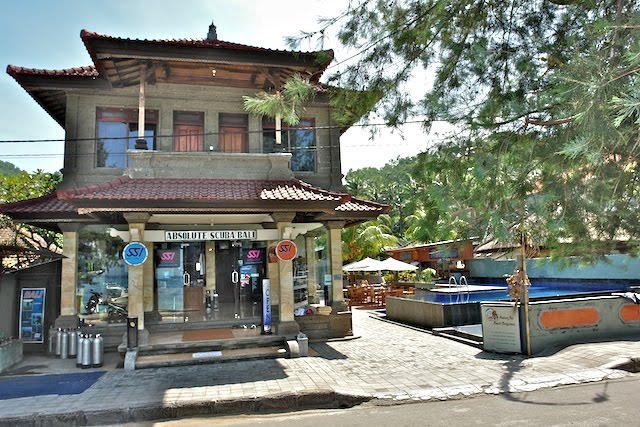
Shop front

Friday, October 14, 2011

Great Mola Mola season in Bali 2011


We've had a brilliant Mola Mola season in Bali this year. Last year we had very few sightings, especially in Crystal Bay, with Mimpang being a better dive spot to see the Mola.
This year we have spotted Mola on every dive, either at Crystal Bay, Mimpang, and even on the drift dives in Nusa Penida (Ped, SD etc).
The dive guests have certainly had the best time; Bali is the place many divers come to see the great fish and with the water temperatures being so cold this year, we haven't disappointed.
So, looking forward to next year to see if we can beat this year on the sheer number of Mola in the water.
Happy, safe diving

Monday, August 29, 2011

Nemo!


One of the most recognised and loved fish in the Bali oceans is the Anenomefish, also called the Clownfish, or as it is mostly referred to, "Nemo".


There are 28 recognised species of clownfish, and come in red, orange, yellow or black colours, many show white bars or patches.

The clownfish feeds on small invertebrates which otherwise potentially could harm the sea anemone that is their home, and the fecal matter from the clownfish provides nutrients to the sea anemone. Clownfish are omnivorous, they eat live food such as algae, plankton, mollusks, and crustacea.

Clownfish and sea anemones have a symbiotic, mutualistic relationship; each providing a number of things to benefit the other. The sea anemone protects the clownfish from predators, as well as providing food through the scraps left from the anemone's meals. In return, the clownfish defends the anemone from its predators, and cleans it from parasites.The anemone also potentially picks up nutrients from the Clownfish's excrement, and functions as a safe nest site.It has been theorized that the clownfish use their bright colouring to lure small fish to the anemone,and that the activity of the clownfish results in greater water circulation around the sea anemone.

In a group of clownfish, there is a strict dominance hierarchy. The largest and most aggressive female is found at the top. Only two clownfish, a male and a female, in a group reproduce through external fertilisation. Clownfish are sequential hermaphrodites, meaning that they develop into males first, and when they mature, they become females. If the female clownfish is removed from the group, such as by death, one of the largest and most dominant males will become a female. The remaining males will move up a rank in the hierarchy.

Clownfish lay eggs on any flat surface close to their host anemones. In the wild, clownfish spawn around the time of the full moon. Depending on the species, clownfish can lay hundreds or thousands of eggs. The male parent guards the eggs until they hatch about 6 to 10 days later, typically 2 hours after dusk.

Clownfish and certain damselfish are the only species of fishes that can avoid the potent poison of a sea anemone. There are several theories about how they can survive the sea anemone poison:

  • The mucus coating of the fish may be based on sugars rather than proteins. This would mean that anemones fail to recognize the fish as a potential food source and do not fire their nematocysts, or sting organelles.
  • The coevolution of certain species of clownfish with specific anemone host species and may have acquired an immunity to the nematocysts and toxins of their host anemone.
They are most commonly remembered for the 2003 animated film 'Finding Nemo', there were two clownfishes who both played a very prominent role in the film. The film told the story of a young clownfish called Nemo, who goes missing and his father Marlin, also a clownfish, goes on an adventure to get him back.

All divers love Nemo!

Friday, August 12, 2011

Tanjung Jepun and the submarine


There's a dive spot not far from the resort where you can find a small shipwreck, an artificial reef, load of reef fish, and ....................a 56 foot submarine!

Not many divers have had an underwater encounter with this species which is not fearful of divers and will come real close to inspect you. It is not a timid beast but will actively buzz around you while you try to dive.

If you look closely you will see that it has many, many eyes and many, many heads (look into the window-like protuberances and you will see Malaysian-looking faces staring back at you!)

We think it is looking for a mate, as it is showing all the signs of a loved-lorn creature, pale white in colour and making strange whirring noises as it searches fruitlessly for something to love.

so, if you happen to dive in Tanjung Jepun and have found the giant frogfish, remember to listen out for the sad wailing that has driven men mad with desire!


Monday, July 11, 2011

Amazing cuttlefish


10 amazing facts about cuttlefish, regular sited creatures for Bali divers:

1, The amazing cuttlefish belongs to the class "cephalopoda", the same family which octopus and squid belong to. With 3 hearts and green blood (Their blood is green because it uses the protein hemocyanin which has copper in it rather than hemoglobin) and the ability to change colour in a flash. They have three separate hearts, one for each gill and and one for the rest of the body. One reason is that their blood flows more rapidly as hemocyanin contains much less oxygen than hemoglobin. These amazing animals (cephalopods) are so unique and beautiful. Even submarines have made use of their buoyancy methods and they have physical characteristics that no other animal has, yet most of us only know them by the piece of cuttle-bone in a bird cage.

2, it is also considered to have the highest intelligence of any invertebrate, as well as the ability to see backwards, use jet propulsion and keep buoyancy in the same way that submarines do. Oh, it shoots jets of ink as well!

3, Cuttlefish bone is filled with gas! Cuttle-bone (the things you see in bird cages) has small chambers and like a submarine, filling or releasing the gas in them controls the cuttlefish's buoyancy.

4, The flesh of the Flamboyant Cuttlefish is poisonous. This is the only species of cuttlefish known to have any poisons and it carries a unique toxin in its muscles. This species is also short and stubby, unlike the long graceful bodies of most others.

5, The cuttlefish eye is shaped like a W. The unique shape of the pupils plays a part in the most highly developed eyes of any animal. They allow the cuttlefish to perceive light polarization and completely reshape their eyes to focus. They also really do have the proverbial eyes in the back of the head, with a second spot on the fovea which allows them to see backwards.

6, cuttlefish change color using a series of special skin cells, chromatophores, iridophores and leucophores, which reflect light in all sorts of colors.

7, Cuttle fish can make themselves completely invisible. Not only do they reflect colors, they are able to merge almost completely with the seafloor.

8, Cuttlefish shoot jets of ink. Cuttlefish ink was the original sepia which was once used by artists - nowadays replaced mostly with synthetic sepia. The ink is used as a defense to confuse predators and allow the cuttlefish time to escape.

9, Cuttlefish don't have a tail. They have a fin all the way around their body instead of tail fins, like squid, and they use this fin to control movement.

10, Cuttlefish have jet propulsion. Cuttlefish can escape from enemies by using rocket propulsion. Water is squeezed down their body (mantle) into a special tubular muscle (siphon) that controls the direction as they are propelled backwards for a short distance.

Tuesday, June 14, 2011

Mola Mola encounter!


Yesterday the conditions at Crystal Bay were just perfect, not too many boats, slight swell, and cold water
(24 degrees C).

We arrived at 9.50am and, after kitting up, dropped straight into the chilly water. We had already been alerted by another dive guide that Mola were here today, and knowing whereabout's he had told us to look was a great head's up'.

Dropping down and along the wall, passing over a sea snake with it's head in a hole, we approached the cleaning station.

Lo and behold, there was a small Mola Mola, hanging at approx 27 metres, being rigorously cleaned by the banner fish.

He hung around only long enough for a couple of quick photos, before he swam off at great speed into the blue.

Lovely day, Mola hunting accomplished and a great first encounter for Dan and Jenny who watched from above!

Wednesday, June 1, 2011

Diving with Frogfish


Open any coffee table book of underwater photography and you are almost certain to see a few pages dedicated to the majestic frogfish. One of the critter kings, frog fish are often photographed for a number of reasons - their various contrasting colours, textures and camouflages, their incredible hunting tactics and of course their down-turned mouths and muppet-like faces. Of course, the fact that they remain absolutely motionless for 90% of the time also helps the happy-snappers.

Few creatures are more fun to spot underwater, usually perched in a squat position in or on a sponge whose texture and colour is identically matched by this stealthy angler; 2 diamond-studded eyes keeping watch for the next victim of its lethal, split-second gulp.

There are any number of reasons why frogfish, in all their shapes and sizes, fascinate and entertain human visitors to their watery domain ...

Frog-fish Fact Sheet

Family name: Antennariidae
Order name: Lophiiformes
Common name: Frogfish or Anglerfish
Scientific name: Antennariidae
Distinguishing Features

Frogfish, so named due to their squat resemblance to the common amphibians, range in size from around 5cm to the giant frogfish's colossal 40cm. They also resemble frogs in that their fins are more like legs, which they use to walk slowly over the sea bed and atop sponges and corals to lie in wait for their prey.

Colour is often not much help in identifying different frogfish since some have many different colours to allow them to camouflage themselves within their environment. Depending on the species, this colour change might take seconds or weeks. Some frog fish's skin is also adorned by bumps, flaps, hairs and tassles which further allow for mimicking the nearby seabed, corals, sponges or weeds. This also explains how divers can often cruise straight past, oblivious to their presence.

There are not many other fish that you might mistake for a frogfish but it can be exceptionally difficult to distinguish between the sexes or species. Short of getting out your scalpel, there is no way to tell male from female. Since colouration is a useless method of identification for all but the most rare species, you should be looking out for species-specific features such as what form the lure takes (mimicking perhaps a worm or fish), the number of eye spots and the number of spines.

Feeding habits

It is the feeding approach of anglerfish that makes it such interesting creatures. Perfectly camouflaged, it lies in wait for its prey. The lure may be used to attract prey in a variety of different ways, depending on the species. They also employ a chemical attractant so sometimes they just lie in wait for some unfortunate to venture too close. When the prey is within grasp the blitzkrieg attack takes place. The frogfish expands its oral cavity engulfing the prey with a reflex that instantly sucks it in by creating suction pressure inside the mouth. Taking no more than around 6/1,000 of a second, it is the fastest 'gape and suck' of any fish. Frogfish have also been seen stalking their prey by sneaking towards their target along the sea bed.

They eat mostly small fish but also shrimps and crabs, with their prey sometimes being up to twice their own body size. Being toothless the frogfish swallows its prey whole, allowing digestive juices to do the rest. The prey can often be seen twitching and writhing against the walls of the its stomach in the throes of death.
Reproduction

Not a great deal is known about the reproduction of frogfish and in the wild it is a very rare sight to witness. During the process the female will fill up with so many eggs (up to 180,000) that her body becomes enormously distended and buoyant. The male will nudge the female's abdomen as they make their way to the surface where spawning takes place.

Some species jealously guard their eggs, while for others parental duties end with mating; the thousands of eggs being released as a drifting egg raft. After up to 2 months the eggs hatch into juvenile frogfish, which are smaller versions of adults but some show special defensive colours.

Life cycle

There is very little empirical data about the life cycle of a frogfish. Most of the available data on marine animals comes from fisheries - not a place where many frogfish are to be found. It is difficult to imagine that they live beyond a few years. Certainly their life span in captivity is only a matter of a few years. In the wild, with the uncertainties of food sources and parasites, it is unlikely to be much longer.

Predation

Frogfish do not have any lightning responses other than for feeding because they have very little to fear in the way of predation. What eats frog fish? Other frogfish. The gulper may become the gulped. However considering that they are designed more to catch fish swimming in the water column, this is a rather rare phenomenon. Moray eels have also been witnessed eating frogfish, but again, this is an uncommon sight.

It is possible that other opportunistic predators would devour frogfish, particularly when they are still young. Indeed in some cultures, man would happily lift some floating sargassum and take the sheltering frogfish home to be eaten.

More often than not, however, the anglerfish are the hunter, not the hunted.

Distribution

Frogfish are found throughout tropical and subtropical waters. Most species live in relatively shallow waters although some species are deep dwelling. Recreational divers in Asia are most likely to spot certain species including giant, clown and painted frogfish.

Ecological Considerations

Estimates of numbers of frog fish are difficult to obtain but they are not believed to have suffered a significant drop in numbers in recent times. Aside from the obvious habitat destruction there seems to be little danger posed by man. Perhaps the greatest of the frogfish's human irritants is the constant flashing of photographic strobes, such is the love underwater cameramen have for these fascinating fish.

Dive Sites

There are many great destinations for diving in the presence of these fascinating creatures. Frogfish are common in Blue Lagoon and particularly Tanjung Jepun where we currently have 4 resident froggies!

Monday, May 16, 2011

Tulamben


Today we're off to Tulamben for 2x dives.

The history of this site is quite interesting;

The U.S.A.T. LIBERTY, a 120 metre long shipwreck, is the remains of a US World War II freighter, torpedoed on January 11, 1942 at 4:15 a.m. by a Japanese submarine, while crossing the Lombok Strait carrying material (rubber and railway parts) from Australia to the Philippines. Two US destroyers hitched up to the ship and tried to tow it to the port of Singaraja. The damage was immense, she was taking too much water and her crew ran the vessel up onto the beach of Tulamben 70km away from the nearest safe harbor.
For 21 years she stayed there, the people of Tulamben secured all items of any value, even parts of the deck. In 1963 the Liberty was pushed to her present location by the fatal eruption of the volcano Gunung Agung. During this process the hull broke into two pieces. Now she is laying only 30 metres from the Tulamben beach on a sandy slope 90° on her side, parallel to the shore. The deck side faces the ocean.
The Liberty ship wreck is the most visited diving site of Bali at a perfect depth for scuba diving ranging from 2.5 metres down to 29 metres. There are a couple of impressive swim throughs, but one must be cautious because the structure of the wreck is unstable, every year parts collapse. An amazing growth of encrusting animals cover the wreck, marine biologists estimate that about 400 different species of reef fish live on the Liberty. It is not usual for this site to be visited by big pelagic species. It also has its own resident Barracuda, we call him Brian!

Thursday, March 3, 2011

Our newest Instructors!


Congratulations to Sean McNamee and Nene Kurronen on passing your IE and becoming SSI's newest Instructors.

We wish you every success in your future career.

Saturday, February 26, 2011

Great find Diduk!


Our eagle-eyed Dive Controller Diduk spotted a beautiful (but shy) Mandarin fish in the Padang Bai area today. Normally we find these colourful critters in Pemuteran but we seem to be hosting our own welcome little visitor just around the corner from the dive shop.

This is brilliant news for all you photography divers out there!

Saturday, February 19, 2011

Say 'hello', wave Goodbye


We've waved goodbye to Wayan, one of our equipment guys, this month as he has been given the opportunity to travel to Australia with his girlfriend. You'll be missed Wayan, good luck for your future.

Into his shoes steps Kadek Ade, a local boy, quick humored and willing to learn. Welcome to the Absolute Scuba team Kadek ☺

Wednesday, January 26, 2011

Reef clean ups and turtle watch


This year Absolute Scuba has become an SSI EcoLogical dive centre. This means we will help to maintain and promote the healthy eco system that we all need to live a healthy lifestyle.

We will:

 Instruct all boat and shop employees as to proper safety and environmental care techniques

 Conduct and advertise beach and dive site clean ups

 Ensure all briefings to divers contain advice on environmentally sound diving practices

 Provide recycling points throughout the dive resort premises and vessels

 Ensure there is no line fishing or collection of any organisms

 Ensure there is no spear fishing

 Provide clearly marked dustbins for waste on boats including cigarette butts, and dispose of receptacles appropriately

 Use purpose placed moorings where possible

 Avoid takings divers or open water students who have not yet demonstrated proficiency in buoyancy directly over corals or other fragile marine environments or habitats

 Participate in local environmental projects

 Report all whale shark & turtle sightings to local recognized data collection points

 Encourage no feeding of fish

 Discourage customers from applying sunscreen before diving

 Run environmental awareness programs for local schoolchildren and communities

 Conduct regular reef checks or surveys

 Offer ECO Logical diver training to our customers

So look out for the reef clean up dates on the website (coming soon) and join us, you never know what you will find underwater as one of our dive controllers, Sean, found this week, when he came across a rice cooker sitting on the reef!

Tuesday, January 18, 2011

New website design


After over 6 months of waiting, we are starting to redesign the scuba website. It's taken a lot of hard work from behind the scenes, thanks to all involved. It's still not completely finished and even now, I still find typos everyday, which means I must have read the bloody thing 20-30 times by now! If only we could have used a professional web builder as first was discussed, but hey ho!

Anyway, take a look around, there's plenty to read (which is one of the problems, we wanted less text and more photos and we've ended up with MORE text and LESS photos)!

And, if you find a mistake.............it's not my fault. LOL

Sunday, January 2, 2011

New year, new hobby?


Have you ever considered scuba diving as a past-time or hobby, or maybe you are already a diver but have plans to improve yourself with continued education in diving, or perhaps taking your diving to a professional level? Ever thought about Technical diving but never had the time or understanding of the skills involved?

Drop me an email through the website for further information about any diving course; we can answer most emails within 48 hours, but if you don't receive an answer by that time, then please send again.

Happy, safe diving for 2011.

Tuesday, December 21, 2010

Seasons greetings


May we take this opportunity to wish all our friends, old and new, a very Merry Christmas and a peaceful New Year for 2011.

Wednesday, December 8, 2010

Ceremony day AGAIN!

It is said there is never a day in Bali without a ceremony of some kind and if you include all the life cycle rites (baby ceremonies, puberty rites, weddings, cremations,Temple festivals), then this adage is probably true. There are definitely certain times that are “ceremony-heavy” such as the full moons in April and October and the high holy days of Galungan (it is Galungan today). Balinese religion (called Agama Hindu Dharma) consist of three primary elements: Hinduism based on what is practiced in India but differing substantially from those traditions, animism (where every living thing has a soul) and ancestor worship (the Balinese deify their ancestors after a proscribed process of cleansing has been done).

Temple festivals are held on the anniversary of when the temple in question was consecrated. This could be an annual event, held on a new or full moon or more likely every 210 days, based on the wuku system, a complex calculation of overlapping days of confluence, some being more “powerful” than others (think of Friday the 13th).

An Odalan or temple ceremony usually lasts for three days, but larger ones (which occur every 5, 10, 30 or 100 years) can last for 11 days or longer. The gist of what is happening here is that the Balinese are honoring the deities that rule over the temple by giving them a myriad of offerings, performances of vocal music, dance and gamelan music. They invite them down from their abode on Mount Agung to partake in the activities.

The temple is dressed up in colorful golden clothes, the images of the deities are taken to the local holy spring to be bathed and dressed in their best, shrines are cleaned, performances are rehearsed, committees are formed and then the big day arrives. Usually people take their offerings to the temple in the late afternoon, after the heat of the day has gone, and everyone's work and school obligations are over.

The offerings, consisting of fruits, rice cakes and flowers, are brought in on women's heads and placed at strategic points around the temple. These are blessed with holy water by the temple Pemangku or priest. The pilgrims then pray, are blessed with and drink holy water and then take the offerings home to share with their families. The gods have taken the sari or essence of the offerings, leaving the “leftovers” for the humans to consume. In the evenings, there could be spectacular performances of music and dance by local groups.

Since every village has at least three major temples (and often many more than that), there is always some kind of community religious activity going on. Aside from the village temple festivals, every household compound's family temple (mrajan/sanggah) also has its ceremony every 210 days.

Busy time in Bali again

Sunday, November 21, 2010

Are you eco-friendly??


As we rapidly approach 7 billion members of this human population, our activities and use of energy and resources are having an increased effect upon the ability of the Earth to sustain us. Coral reefs are a vital indicator of the overall health of the planet and most are currently flashing red.

Existing within precisely defined, narrow physical and chemical limits, these ancient ecosystems are highly sensitive to changes in the Earth’s climate. Around two thirds of global reef systems have already gone, the rest threatened or in serious decline.

The reasons are numerous and complex, but pollution from land-based activities, increases in seawater temperature and abnormal levels of predation, caused by human removal of key species, add to the rate of loss of these elements.

The world has discovered that our wonderful sharks, these magnificent creatures which have gone from predator to prey, and how despite surviving the earth's history of mass extinctions, they could easily be wiped out within a few years due to human greed.

Are you doing your bit for conservation and support?

We need to:

Look after the environment

• do not touch the coral or any marine life
• do not collect live shells, coral or fossils
• do not feed fish or other marine life
• do not attempt to capture or trap marine life
• leave no rubbish or debris
• take only pictures, leave only bubbles

Write to your politician, boycott countries which sell shark products, do not buy marine objects promoted to tourists etc etc

or join Sea Shepherd and become an underwater spy! : http://www.seashepherd.org/

Wednesday, November 10, 2010

Technical diving


Xtreme Excitement

SSI’s TechXR is a well founded Technical Diving program and it was created to take the recreational diver to an extreme level for their diving adventures.
Whether you are looking for the excitement of deep reef diving or the thrill of exploring wrecks located well past 40m (130 feet), SSI TechXR is a way to learn the training and experience necessary for you to complete every new adventure with confidence and skill.
Whatever your current diving ability, extended range diving will challenge you with environments, depths, bottom times, procedures, and equipment not commonly encountered by recreational divers. You will be experiencing advanced levels that require extensive knowledge, enhanced diving skills, and considerable experience.

Xtreme Training

To support your journey, SSI has developed specific learning tools: a manual, interactive CD-ROM, Technical DiveLog and Technical Dive Slates. In addition, your instructor may also require you to have a personal copy of an advanced dive planning software program.
The courses available for you to take are: Advanced Nitrox, Technical Foundations, Decompression Procedures, Normoxic Trimix, and Advanced Decompression Procedures. You can take each of these courses individually or all at once.
You will develop confidence and comfort with these new skills through repetition and supervised experiences. Training will be designed to match your goals and objectives. SSI′s signature training method′s the "SSI Diver Diamond "and "Comfort Through Repetition" have been applied to keep the programs consistent and provide the same high quality education as other SSI products.

Please email Absolute Scuba to arrange your Tech diving future

Saturday, October 23, 2010

Drift diving


Drift diving is a popular form of diving which is defined not by equipment or technique, but by location and water currents. In most open water diving situations the scuba diver propels himself by swimming and kicking the fins. In drift diving the diver descends into water with a known current and after obtaining neutral buoyancy lets the current just carry him along.

Drift diving is arguably the most relaxing and pleasant diving experience there is. Because the diver is not exerting himself by swimming, he uses less air and thus can stay submerged longer on a single tank. Many popular drift diving reefs have currents which run parallel to the reef; once submerged the diver relaxes and watches the scenery float by; using only minimal effort to stay neutral and navigate around formations.

The whole point of drift diving is to "go with the flow" and not to swim against the current. The movement is often so gentle that divers don't realize how powerful the current is; but they may soon realize its force when trying to swim against it! With a group of divers swimming into the current differences in swimming strength and fitness quickly become apparent since some divers swim easily upstream while others struggle to keep up. Going with the current a large group of divers can stay together very easily. Regardless of fitness level or swimming strength swimming against a strong current will use more air and the exertion of fighting the current shortens the diving experience.

Drift diving is almost always done from a boat drop-off, you must have someone on board to follow you. Once you begin drifting you will be carried quickly away from your drop-off point - often much more quickly than you realize or expect. It is very important for the boat captain to know which way the current is flowing and follow you from above. In calmer water (especially with larger groups of divers) the boat captain can see your bubbles and follow them. It is a very good idea for your group to have a surface marker buoy, on a reel, that you can send up when you begin to ascend - the boat will see it and approach to pick you up.

Bali water have many drift diving sites, especially on the Nusa Penida side of the island; Ped, S.D, Sental, Toyapaka, to name just a few. Enjoy your diving.

Saturday, October 2, 2010

Nudibranch facts


We've all seen these colourful little critters whilst diving, but how many of us actually know some facts about them:

What is a nudibranch or sea slug? Although the term “slugs” conjures up all kinds of unpleasant ideas, nudibranchs (pronounced “noo-dee-branks”), more commonly known as sea slugs, are renowned for their boundless variety and beauty. Nudibranchs are gastropod molluscs.

What do they look like? Nudibranchs are shell-less molluscs, so imagine a colourful snail without a shell. Different species have a vast variety of body shapes and range from a few millimetres to 30 centimetres long. The word nudibranch is Latin and literally means “naked gills”. The name refers to the circle of exposed gills on the back of many species.

Where do they live? Nudibranchs can easily be seen by observant divers in all of Bali's dive sites. On reef walls or reef tops, they may nestle among an array of other invertebrates, such as sponges, on which some predate. However, hundreds of species of nudibranchs that have so far been recorded in Bali waters. Divers willing to investigate nooks and crannies can often spot species that have not yet been scientifically described.

What they eat and how: Nudibranchs are exclusively carnivorous, and, depending on the family and the species, often feed on a specific species of prey. Some species, for instance, feed exclusively on mollusc eggs, others on a particular species of sponge.

Behaviour: With no shells for protection, nudibranchs have had to develop a vast armoury of alternative defences. Some species can produce a distasteful noxious secretion to deter potential predators, such as fish. Other species feed on sea anemones, hydroids, jellyfish, soft corals and hard corals and are able to store special stinging cells called nematocysts from these animals food they eat. When attacked, they can discharge the stinging cells to deter their predators. Other nudibranchs use camouflage to avoid detection. Most nudibranchs have intricate and vivid colour patterns to advertise to predators that they are dangerous to eat.

Breeding: All nudibranchs are hermaphroditic, that is, the animal acts as both a female and a male. Copulating pairs inject sperm into each other by a penis. Eggs are usually deposited by each individual in a coiled mass on underwater surfaces. A few species emerge from the egg as a crawling juvenile. However, most emerge as free swimming larvae, with a tiny remnant shell. These swim about in the water column until they are ready to settle on the bottom.

How you can protect nudibranchs: When diving or snorkelling, look at but don’t touch these soft-bodied animals.

Monday, September 27, 2010

Macro lovers


Bali is a great place to dive for the macro lovers amongst us. We have numerous dive sites just perfect for that photo opportunity or brief encounter. 2 minutes from the resort we have an artificial reef (Tanjung Jepun) that is home to banded pipefish, robust pipefish, giant frogfish and hairy frogfish, crocodile fish, thorny seahorse, to name but a few.

Over at Tulamben we have scuba seraya macro dive site, also great for all those weird and wonderful oddities such as harlequin shrimp, many many obscure nudibranchs and enough reef fish to please any diver.

Bring your camera (we also have cameras for hire, including CD burn) and let's get wet!